
As a reading interventionist, I’ve seen firsthand how a balanced approach to reading instruction can unlock a student’s full potential. While phonics often takes center stage, it’s crucial to remember that reading is a complex tapestry woven together by five interconnected strands: phonological awareness, phonics, fluency, vocabulary, and comprehension. This is especially true for older elementary and middle school students who may still be grappling with foundational reading skills.
The Reading Rope: A Closer Look
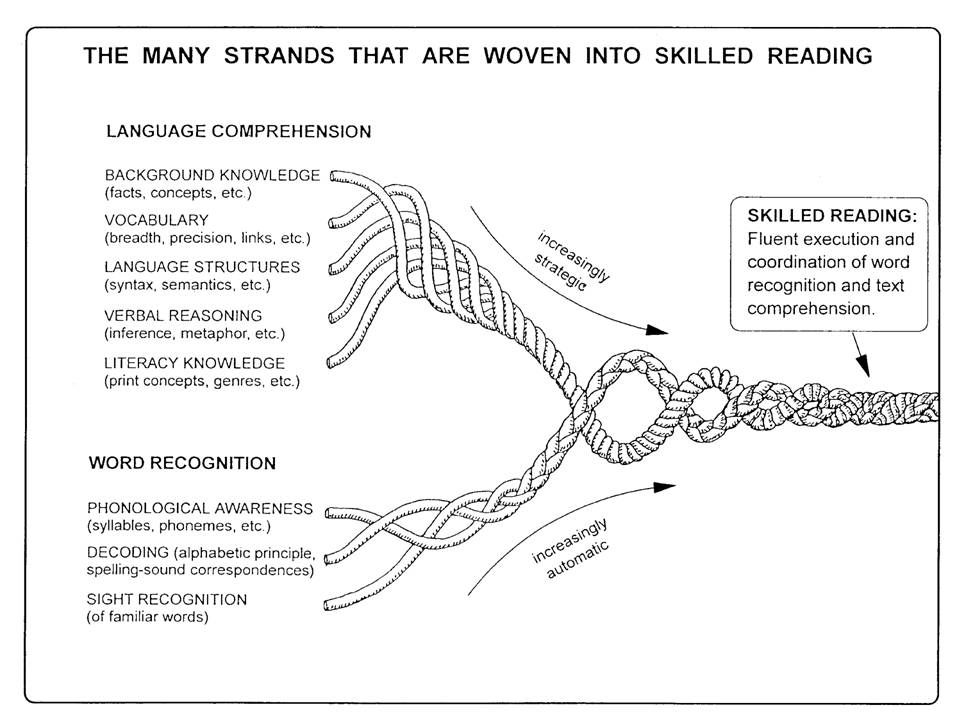
The Reading Rope serves as a powerful visual metaphor for the complex process of reading. Developed by Dr. Hollis Scarborough, it illustrates the many strands that are woven together to create skilled reading.
The Reading Rope is divided into two main categories:
- Word Recognition: These are the foundational skills that allow readers to decode words, including phonological awareness, phonics, and sight word recognition. These skills are often the focus of early reading instruction, and they are essential for developing fluency.
- Language Comprehension: These are the higher-level skills that allow readers to understand the meaning of text, including vocabulary, background knowledge, language structures, verbal reasoning, and literacy knowledge. These skills are essential for reading comprehension, and they become increasingly important as students progress through school.
I love this animated reading rope from the AIM Institute for Learning & Research.
Five Essential Components of Reading
There are five key skills that contribute to proficient reading.
- Phonological Awareness: This is the bedrock of reading, involving the ability to recognize and manipulate sounds in spoken language. For older struggling readers, focusing on phonological awareness can significantly improve their ability to decode words and build fluency.
- Phonics: While phonics instruction is typically emphasized in early grades, older students who haven’t mastered these skills may need additional, targeted support. Systematic phonics instruction can help them connect letters to sounds and decode words more effectively.
- Fluency: Fluency, the ability to read smoothly and with expression, is crucial for comprehension. Older readers who lack fluency may benefit from repeated reading exercises, choral reading, and other activities that promote automatic word recognition.
- Vocabulary: A rich vocabulary is essential for understanding complex texts. For older students, explicitly teaching vocabulary strategies, such as context clues and word roots, can significantly expand their word knowledge and improve comprehension.
- Comprehension: This is the ultimate goal of reading—understanding what is being read. For older students who struggle with comprehension, explicit instruction in strategies like summarizing, making inferences, and visualizing can make a world of difference.
Why All 5 Strands Matter for Older Readers
For older students who are still developing foundational reading skills, addressing all five strands of the reading rope is crucial. Neglecting any one of these areas can hinder their progress and create a frustrating cycle of failure. By providing comprehensive and targeted instruction in all five areas, we can empower older struggling readers to catch up and reach their full potential.
Strategies for Weaving a Strong Reading Rope for Older Students
- Individualized Assessment: Identify each student’s specific strengths and weaknesses in all five areas of the reading rope. This will help you tailor instruction to meet their individual needs.
- Targeted Intervention: Provide explicit and systematic instruction in the areas where students need the most support. This might involve small group instruction, one-on-one tutoring, or specialized interventions.
- High-Interest Materials: Use engaging and age-appropriate texts that appeal to older students’ interests. This can help motivate them to read and practice their skills. You can find many high-interest materials at my TPT store, Teen Foundations.
- Scaffolding and Support: Gradually increase the complexity of texts and tasks as students progress. Provide ongoing support and feedback to help them build confidence and independence.
- Collaboration: Work closely with parents, teachers, and other professionals to create a coordinated and consistent approach to supporting older struggling readers.
By focusing on all five strands, we can help students become skilled and confident readers. Remember, reading is not just about decoding words; it’s about unlocking a world of knowledge, imagination, and possibility, no matter a student’s age or reading level.
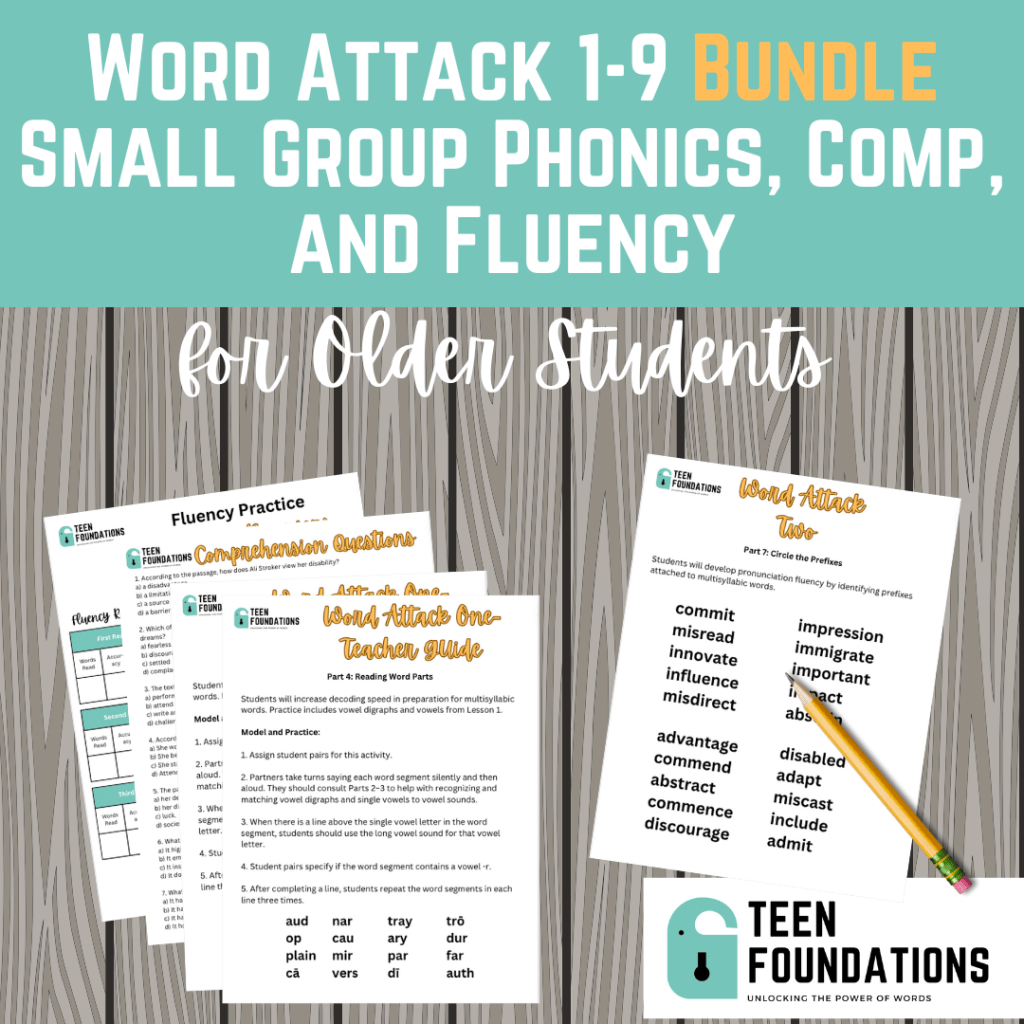
 Teen Foundations: Foundational Skills for Older Students
Leave a comment