
Teacher-led small group instruction can be a game-changer in middle grades, especially in a Title 1 school setting. If done correctly, small groups can greatly enhance student engagement, comprehension, and independence. As a Title 1 reading teacher, I use several strategies that can make small group learning truly effective.
One of the biggest things I hear is, “But what do I do with my small groups?” And to that, I always respond, “Focus on targeted instruction.” Rather than attempting to cover a broad range of topics, concentrate on one specific area at a time in each group. It might be a particular vocabulary skill, a reading comprehension strategy, or a phonics-related aspect. By tailoring your instruction to fit the needs of each small group, you can address learning gaps more efficiently and reinforce knowledge in a more friendly and manageable environment. Remember, these are your essential minutes to delve deeper, clarify, and connect personally with each student, making every moment count in boosting their reading skills.
Here are a few of the strategies I use in my own small groups for success.
Strategic Grouping
Strategic grouping is a method of organizing students into small groups based on several factors, including ability, interest, or learning style. It’s a critical component in successfully implementing teacher-led instruction, as it facilitates targeted teaching. I’ve written more about strategic grouping here.
Create Engaging Mini-Lessons
Creating engaging mini-lessons for your small group instruction is key to capturing interest and facilitating learning. These lessons are typically short – no more than 15 to 20 minutes – to retain students’ attention and to make the most out of the limited time you have. The objective is to impart instruction that is pinpointed to a specific skill or fill any existing content gaps.
When designing these mini-lessons, first identify the individual learning needs of your group. Use data from observations, assessments, and class work to focus on areas requiring reinforcement or skills needing development. The criteria for selecting topics should be guided by the question, “What does my group need to learn next?”
Keeping the lessons dynamic is essential. You might want to introduce a new comprehension strategy with a short video, followed by a teacher-guided discussion. Or perhaps you could have students practice morphological affixes they’ve learned with an engaging game. More complex topics should be broken down into smaller, manageable layers through a series of mini-lessons, building up mastery over time.
It’s important to keep in mind that although the lesson is led by the teacher, students should be at the center of the learning process. Encourage student interaction and questions, creating a discourse that reiterates the learned content, provides opportunities for further explanation, and builds confidence within students. Remember, the goal of these mini-lessons in a small group setting is not only to bolster a particular skill set, but also to nurture a safe and active learning environment where every student feels involved.
Implement Continuous Assessment
Continuous assessment throughout small group instruction provides a real-time snapshot of students’ understanding, enabling educators to address misconceptions on the spot and adjust teaching strategies as needed. Careful monitoring ensures that all students in the group are progressing together and benefiting from the instruction.
One effective way to incorporate this approach is through weekly or bi-weekly progress monitoring. This strategy involves brief, regular assessments of a student’s learning trajectory in relation to specific academic goals or standards. These could be formal tools such as short quizzes and comprehension checks or more informal methods such as jotting down observations, compiling anecdotal records, or even having quick in-the-moment discussions with students about their learning.
By assessing students’ progress frequently, you’re able to gauge the effectiveness of your instructional approaches and make data-informed decisions for future planning. If a student or a group is struggling with a particular concept or skill, you can adjust your teaching method or devote additional time to that area. If a student is excelling, you can provide more challenging resources to keep them engaged and advancing.
This real-time feedback loop also assists in goal-setting with students. It aids in establishing clear expectations and objectives while fostering a sense of ownership and engagement in students over their own learning process. It also provides an opportunity to celebrate small victories along the way, building up students’ confidence in their abilities.
And while continuous monitoring may seem daunting, remember that it doesn’t need to be overly complex or time-consuming. Simple, strategic, and regular checks on progress can deliver valuable insights that will help you tailor your teaching to meet the needs of your individual students in your small group sessions. Let’s make assessment work for us as an insightful tool, guiding our instruction and aiding our students in their learning journey.
Make it Fun
No, everything in education (or life!) doesn’t have to be fun. But I’m a firm believer that we’ve lost a lot of the magic of school. Even big kids like to have fun! One of the ways I bring fun into my small groups is through skill-based games.
A word of caution: do NOT play games for skills that haven’t yet been explicitly taught! This ensures that fun reinforces understanding, rather than leading to confusion.
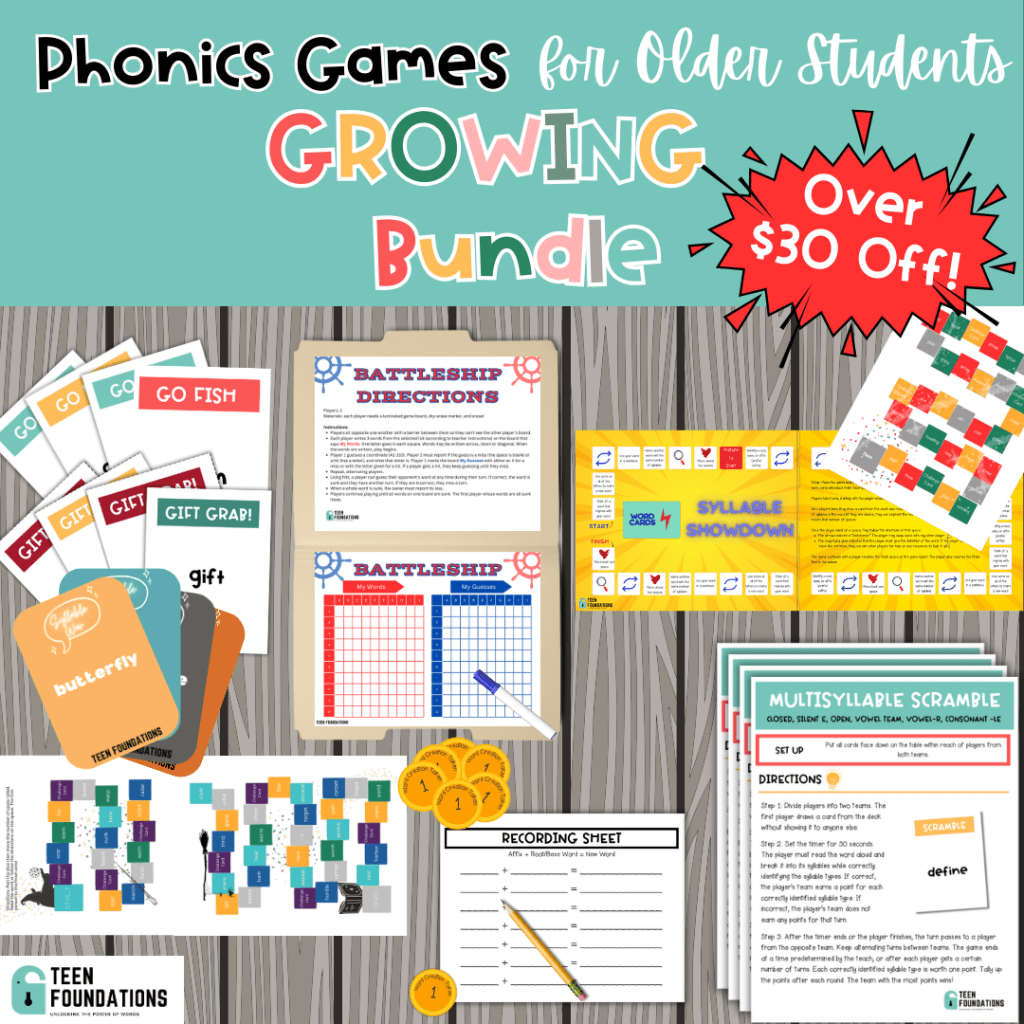
An exciting resource I’ve designed for bringing this fun element into learning phonics and morphology skills is a bundle of engaging games available on my TPT store. Tailored explicitly for upper-grade students, these games turn phonics practice into a lively, interactive, and enjoyable experience. This growing bundle, currently offering over 30 no-prep print and play games, is a treasure trove of activities that saves you time and sanity.
 Teen Foundations: Foundational Skills for Older Students
Leave a comment