

Strategic grouping is a method of organizing students into small groups based on several factors, including ability, interest, or learning style. It’s a critical component in successfully implementing teacher-led instruction, as it facilitates targeted teaching. In my 5th and 6th grade Title 1 Reading classroom, I have come to realize the power of strategic grouping. Each day, I see students with diverse abilities, interests, and learning styles. By using strategic grouping methods, I can address the unique needs of each student, creating an inclusive learning environment where every child feels both challenged and supported.
Here’s a little more about the different types of grouping I use.

Ability-Based Grouping
Ability-based grouping involves placing students with similar skill levels together. This allows for instruction that is tailored to where students are in their learning journey. According to a study published in the Journal of Educational Psychology, ability-based grouping was found to increase overall student achievement.
Mixed-Ability Grouping
Alternatively, strategic grouping can involve mixed ability groups, where students of varied skill levels work together. A research article featured in the Cooperative Learning and College Teaching Newsletter highlights how mixed-ability grouping fortifies peer learning. Higher achievers consolidate their knowledge through teaching, and students who struggle get the benefit of peer-explanation, often in language they find easier to understand.
Task-Based Grouping
Strategic grouping can also consider interests or specific tasks. A 2018 study by the Journal of the Learning Sciences found that students who were grouped according to their interest performed better increased engagement, and had a more positive attitude toward the task.
Learning-Style Based Grouping
Grouping accounting for learning styles (visual, auditory, kinesthetic, or read/write learners) may also be strategic to maximize learning. A paper in the International Journal of Humanities Social Sciences and Education outlines how catering instruction to learning styles can enhance academic achievement.
Effective small-group instruction relies heavily on strategic grouping methods. Each approach offers distinctive benefits that can enrich the learning experiences of your students. Research has continually shown that thoughtful grouping in classrooms can lead to improved academic achievement, boosted engagement, and stronger community building. As educators, it’s our role to employ these strategies to meet our students where they are and guide them forward.
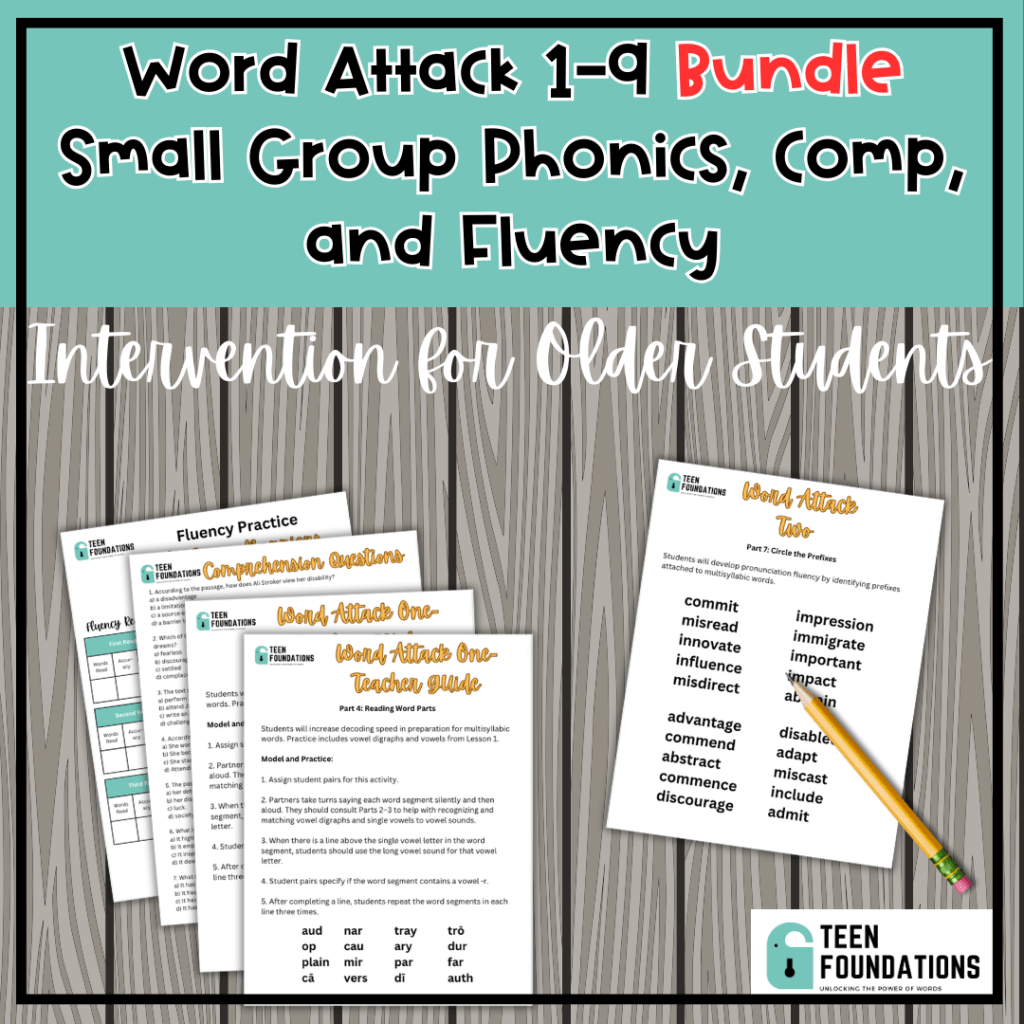
Not sure what to do with your small groups? If your students struggle with decoding multisyllabic words, my very favorite resource is Word Attack, a small-group intervention where older students master vowel sounds, word parts, and affixes in a systematic introduction schedule, resulting in better reading accuracy. Right now, it’s on sale!
 Teen Foundations: Foundational Skills for Older Students
Leave a comment