
Effective reading instruction lies at the heart of academic success. Recognizing the criticality of this skill, Missouri’s Department of Elementary and Secondary Education has begun to transform reading education throughout the state. One of the requirements of Missouri Senate Bill 681 is to create a Reading Success Plan (RSP) for any student who demonstrates a substantial deficiency in reading.
What is a Reading Success Plan?
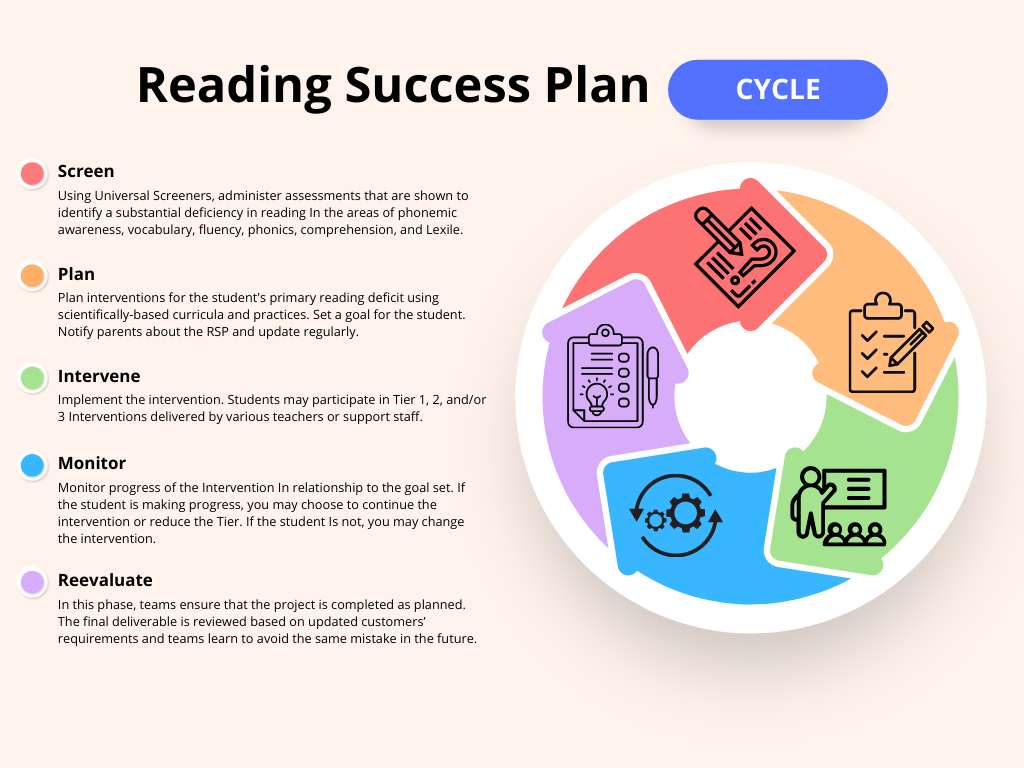
An RSP is an intentional, well-structured plan formulated to assist students demonstrating a substantial deficiency in reading (SRD). Typically, SRDs are identified through state-approved assessments, dyslexia screenings, teacher observations, or any other pertinent student reading data. The objective of an RSP is to monitor and improve specific skills needing enhancement based on captured data.
Who Needs a Reading Success Plan?
The necessity for an RSP arises when a universal screening assessment shows that a student is one or more years in aspects of phonemic awareness, vocabulary, fluency, phonics, and comprehension, or exhibit a lag in overall Lexile score. Additionally, students with an Individualized Education Program (IEP) and diagnosed dyslexic students might also need RSPs. It’s important to note students with an IEP covering SRD skills don’t require an RSP. However, if the skills are not addressed in the IEP, an RSP is required.
Building an RSP involves gathering and analyzing student data to create a ‘body of evidence’ underpinning all reading and oral language components. Datasets gathered from:
- state-approved foundation reading assessment
- universal reading screeners
- information gleaned from teacher observations
- formative and summative assessments
- independent work
Once substantive evidence is gathered, evaluating whether an SRD exists becomes possible. A common SRD indicator includes delayed reading or reading readiness by one or more grade-levels. Students also risk developing SRDs if struggling in areas of phonemic awareness, phonics, fluency vocabulary, and comprehension, or if they are lagging in overall Lexile level score. In some instances, teachers can use their discretion to apply an RSP even when a student is marginally approaching or meeting the skill level due to the presence of a reading deficiency.
*Important note: Any students with a formal diagnosis of dyslexia, regardless of whether they currently exhibit a SRD, is required to have an RSP.
How are Reading Success Plans Created?
The RSP should use collected data to set realistic, achievable growth goals determined by a student’s specific areas of improvement. As progress monitoring data is collected, the RSP should be updated and revised consistently. The end of instruction should mark the assessment of students meeting their set growth goals.
An RSP written at the beginning of a school year will likely include:
- Universal Screening Data in phonemic awareness, phonics, fluency, vocabulary, and comprehension AND an overall Lexile score (Winter and Spring added after assessments)
- Other data including teacher observations, formative/summative assessments, formal dyslexia diagnosis
- A list of student reading needs
- A goal for their primary literacy need, including the planned intervention (method, person responsible, frequency, and plan for progress monitoring)
How Do Students Exit an RSP?
Upon demonstrating proficiency in essential foundational reading skills on state-approved assessment scores consistently over two consecutive occasions, a student can exit an RSP. Mean proficiency should be demonstrated without the need for Tier 2 or Tier 3 intervention supports, but within the scope of Tier 1 instruction alone. It’s crucial to ask – can the student read confidently across all sub-skills measured in the assessment? Is the gathered evidence in alignment with the assessment data? For English learners, adequate language support should be provided in Tier 1 programming to ensure continued reading progress.
Of note, this plan follows students UNTIL they demonstrate proficiency over two occassions, even beyond 5th grade.
The creation of a robust RSP can make a significant difference in the literacy journey of students. Let’s help them turn the pages more easily.
 Teen Foundations: Foundational Skills for Older Students
Leave a comment